VERMIGLIO
VERMIGLIO
Year::2024. Netflix. . English / Portugues
Country: Itália
Direction: Maura Delpero
Awards: Venice Film Festival Academia de Cinema Italiano. 2024
Golden Lion (best Film)
Winter Silver Lion Grand Jury Prize
Academy Awards 2025
Chicago Internacional Film Festival ( honor) 2024
Italian National Syndicate of Film Journalists
Cannes Women in Motion Award (2020)
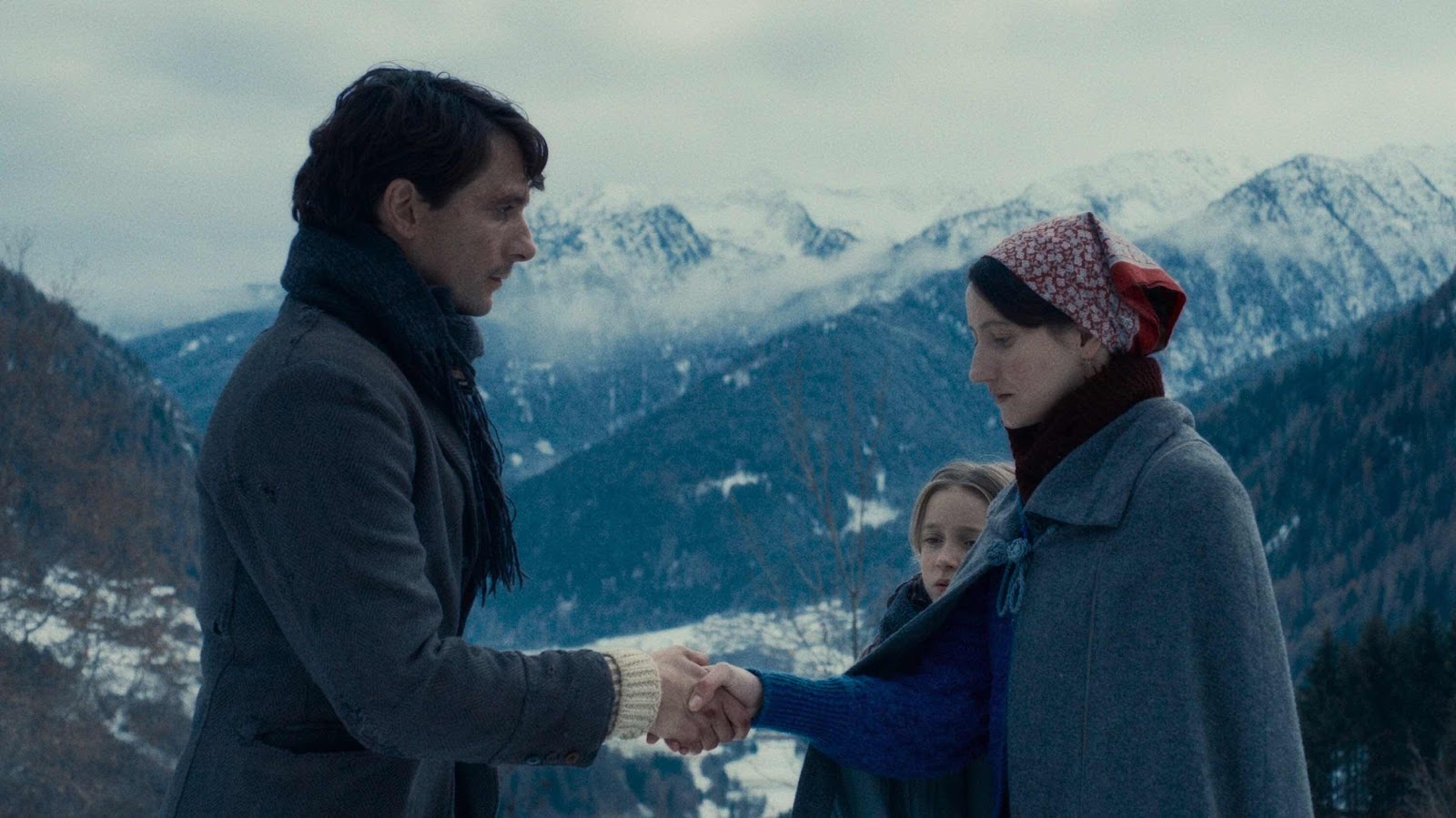
This film tells the story of a family living in the cold north of Italy. During the war, in the Alps, this small community, consisting of almost a single family, is practically isolated. The community has a school to teach children and adults to read and write. The teacher, father of a family with three daughters and a son, is a refined man who listens to classical music and opera.
He is a strict and demanding teacher. He has another newborn son who is ill. This baby dies and his wife, who is already pregnant, is expecting their tenth child. He does not seem to care much about the death of the infant. Nor is he empathetic towards his son, a young man who constantly strives to please his father. Cesare is a man who appears as cold as the temperature of the place. He rules the community; he is the patriarch, for he also holds the knowledge. His wife, Ada, takes care of the family.
The older daughters, like the boy, work on the farm. The youngest daughter is chosen to continue her studies at a school in the city. As they can only afford to pay for one of their children's education, the youngest, who is the most intelligent, is chosen.
The eldest, Lucia, dreams of getting married and ends up falling in love with a Sicilian soldier, who carries on his shoulders a cousin of hers who is also a soldier in the war. The two deserters are welcomed by the community. Pietro, the Sicilian, also likes Lucia. And when Lucia becomes pregnant, she proposes to him that they get married. Pietro thinks about it for a night and then agrees.
The couple is happy. The war ends and another boy returns to the community, bringing great joy to his mother.
Cesare takes advantage of this event, the end of the war and the return of the combatants to their families, and decides that Pietro should return to Sicily to find his mother as well.
The patriarch, besides being very powerful, is also very selfish. They live in great food scarcity, Ada is thin, always breastfeeding and complains about having to go hungry to feed her children. Cesare, however, always well dressed, has vices that during the war are costly, such as cigarettes and drink, as well as buying records that are really very expensive at that time and which he listens to on his gramophone. In addition to his addiction to photographs of women, which were also very expensive at the time, he has a very different standard of living from the rest of his own family. He is strong and well fed.
When his youngest child is born, upon noticing Ada's joy at receiving a rose from his eldest son, he scolds him. He is jealous of his own son and competes with him. That is why he denied him his diploma at the end of the course. A diploma that is highly valued in the community. César is a man of little affection and subtly cruel, and his decision seems to be aimed at driving away the happy couple, Lúcia and Pietro, by sending him back to his homeland, which is in the most distant place, in the extreme south of Italy. This decision makes us suspect that he also knew about his son-in-law's past life. That he had already been married in Sicily. Well, it is clear that his nephew knew this fact. This leads us to suspect that his daughter Lucia's happiness and her great love for Pietro, which was reciprocated, disturbed him. He was extremely jealous, like all very selfish and controlling men.
How many women have suffered throughout human history at the hands of men who were supposed to protect, support and sustain them?
The name given to this patriarch is interesting. It means Emperor. And wasn't that exactly what men were?
Lucia falls into deep sadness and anxiety, first waiting for news from such a distant land. Then, when the news of Pietro's murder by his wife in Sicily arrives, she falls into deep sadness. Her daughter is born around the same time as her youngest brother. Lucia is unable to care for the baby. Extremely intelligent, her younger sister tells her other sister that she will give up studying abroad because she needs to help Lucia care for her daughter since their mother is busy. The middle sister then decides to help care for the baby. l
This child brings these sisters together, as they head to the big city to work. Brave, Lucia Goes to see her husband's wife and meet their son. She receives letters that Pietro asked the parish priest to deliver to her. Pietro's ex-wife, seeing her so sad, widowed, unaware that she is his rival, asks her if she has had children. As if asking if she no longer has any reason to live. If she has no one to love. If no one needs her anymore. Lucia, who was imprisoned in her sadness, returns to life, and the final scene is lyrical, profound, and moving, touching the female human soul in its purest and most delicate mystery. The experience of motherhood.
The film masterfully shows the contrast between the rudeness and arrogance of the patriarchy and the sensitivity, cooperation, care, and ultimately the emotional intelligence of the children, and especially the women in this family.
VERMIGLIO
Esse filme nos conta a história de uma família que mora no norte frio da Itália. Durante a guerra, nos Alpes, essa pequena comunidade, composta por quase uma única família está praticamente isolada. Na comunidade funciona uma escola para alfabetizar crianças e adultos. O professor, pai de uma família com três filhas e um filho , é um homem refinado , ouvinte de música clássica e ópera.
É um professor severo e exigente. Tem outro filho recém- nascido que está doente . Esse bebê morre e sua mulher já grávida espera o décimo filho. Ele parece não ligar muito para morte do lactante. Assim como também não é empático com seu filho, um rapaz que se esforça constantemente para agradar a esse pai. Cesare é um homem aparentemente frio como a temperatura do local. Ele comanda a comunidade, é o patriarca, pois detém também o conhecimento. Sua mulher, Ada, cuida da família.
As filhas mais velhas , assim como o rapaz, trabalham nos afazeres rurais. A filha mais nova é a escolhida para continuar seus estudos na cidade, em um colégio. Como só podem pagar os estudos de um dos filho nova que é a mais inteligente, é a escolhida.
A mais velha, Lucia, sonha em se casar e acaba se apaixonando por um soldado siciliano, que traz nos ombros um primo dela também soldado, da guerra. Os dois desertores são acolhidos pela comunidade. Pietro, o siciliano, também gosta de Lúcia. E, quando Lúcia engravida , ela propõe a ele ,se casarem. Pietro pensa por uma noite e depois concorda.
O casal está feliz. A guerra acaba e um outro rapaz retorna à comunidade trazendo muita alegria à mãe.
Cesare aproveitando esse acontecimento , o fim da guerra e retorno dos combatentes à família, decide que Pietro deve retornar à Sicília para encontrar sua mãe.
O patriarca ,além de muito poderoso, é também muito egoista. Vivem em grande escassez alimentar, Ada está magra, sempre amamentando e queixa-se de ter de passar fome para alimentar os filhos. Cesare, porém, sempre bem vestido, tem vícios que durante a guerra são custosos como cigarros e bebida além comprar discos que são realmente muito caros naquela época e que ouve em seu gramofone. Além de seu vício por fotos de mulheres coisa também muito cara na época. Ele, possui um padrão de vida muito diferente do resto de sua própria família. Ele está forte e bem alimentado. Quando do nascimento de seu último filho, ao perceber a alegria de Ada por receber uma rosa de seu filho mais velho, repreende-o. Ele tem ciúmes de seu próprio filho e , compete com ele. Por isso negou a ele o diploma no final do curso. Diploma muito valorizada na comunidade. César é homem de pouca afetividade e sutilmente cruel, e sua decisão de afastar o casal feliz Lúcia e Pietro, mandando- o retornar a sua terra natal, que fica no lugar mais distante , no extremo sul da Itália. Essa decisão nos faz desconfiar que ele também sabia sobre a vida pregressa do genro. Que este já era casado na Sicília. Pois, fica claro que seu sobrinho conhecia esse fato. Traz- nos, então ,a suspeita de que a felicidade de sua filha Lúcia e seu grande amor por Pietro também retribuído, o perturbava. Extremamente ciumento como todo homem muito egoista.
Quantas mulheres não sofreram, durante a história da humanidade, nas mãos de homens que deviam protegê-las , ampará-las e sustentá-las.
Interessante o nome dado a esse patriarca. Nome que significa Imperador. E não era isso mesmo que os homens eram?
Lucia, cai em profunda tristeza e ansiedade primeiro esperando notícias de terra tão distante. Depois quando a notícia do assassinato de Pietro, por parte de sua esposa na Sicília chega , cai em profunda tristeza. Sua filha nasce na mesma época do nascimento de seu último irmão. Lúcia não consegue cuidar da menina. Extremamente inteligente sua irmã mais nova diz a outra irmã que vai desistir de ir estudar fora pois precisa ajudar a Lúcia cuidando de sua filha já que sua mãe está ocupada. A irmã do meio, resolve então, ajudar a cuidar do bebê.
Essa criança promove a união das irmãs que vão para a cidade grande, trabalhar. Corajosa Lucia vai ver a esposa de seu marido e conhecer o filho desses. Recebe cartas que Pietro pediu . A ex-esposa de Pietro, vendo-a tão triste, viúva, sem saber que ela é a sua rival, pergunta- lhe se ela não teve filhos. Como se perguntasse se ela não tem motivos mais para viver. Se não tem a quem amar. Se ninguém mais precisa dela. Lúcia que estava encarcerada em sua tristeza , volta à vida, e a cena final é lírica, profunda, emocionante que toca a alma humana feminina no mais puro e delicado mistério. A experiência da maternidade.
O filme mostra com muita maestria o contraste entre a rudeza e arrogância do patriarcado e a sensibilidade, cooperação, cuidado, enfim a inteligência emocional por parte dos filhos e em especial, das mulheres dessa família.


Comentários
Postar um comentário