DAHOMEY
DAHOMEY. ENGLISH. /. Portugues
Ano : 2024
Direção: Mati Diop
País: Benim , França , Senegal
Prêmio: Urso de Ouro , Festivald de Berlim
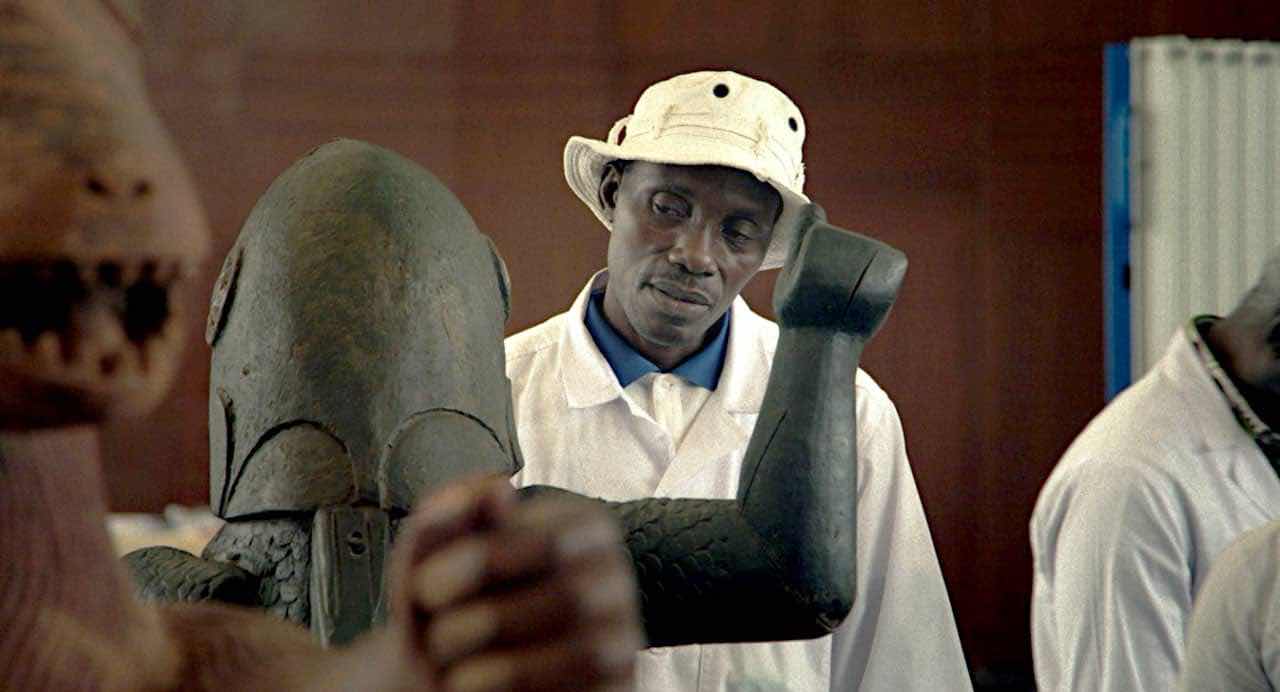
Directed by: Mati Diop
Country: Benin, France, Senegal
Award: Golden Bear, Berlin Festival
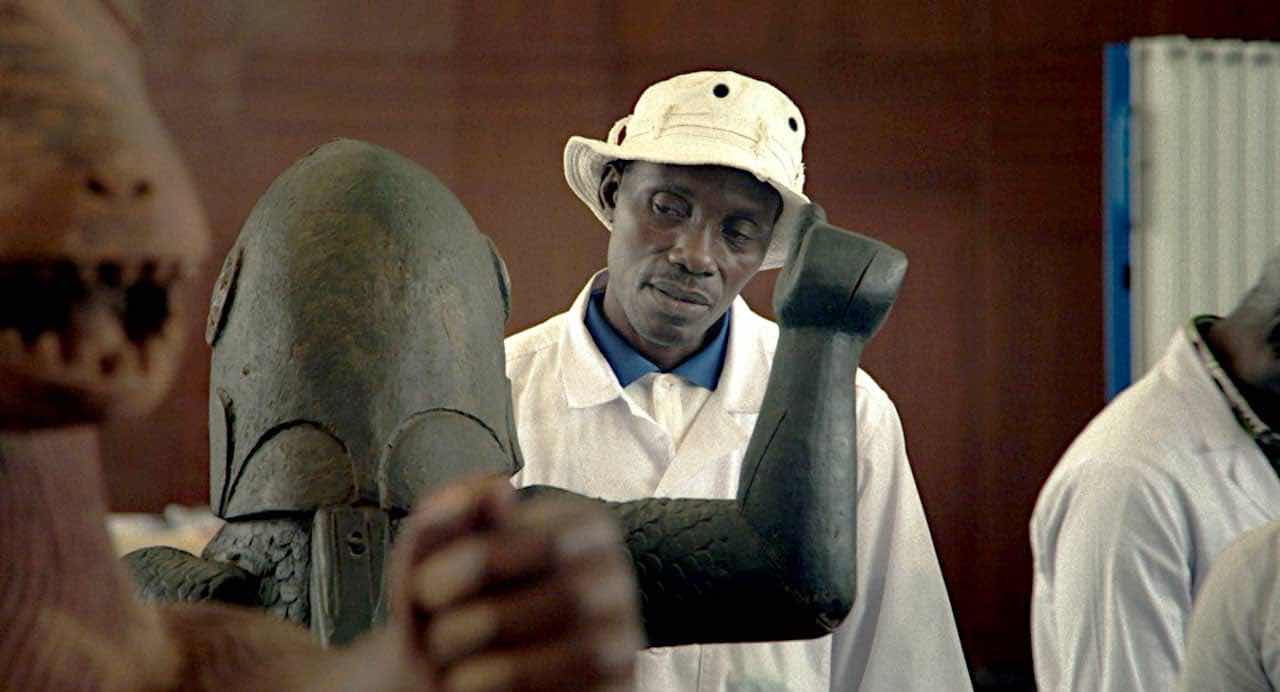
This documentary is about artifacts looted by French troops at the time of the invasion of the kingdom of Dahomey, now the Republic of Benin, which are returned to their origin. The speaker is a totem of a god of the King of the time. His speech is that of someone who does not know what to expect from his return to his homeland and who feels he has been in captivity. His voice is the voice of his people. He no longer knows his name, now he is number 26. Just as his people have lost their historical references, he is also unaware of his roots, his ancestry. French colonization marked this kingdom for more than 60 years of slavery. Many were sold to other countries, separating them from their own people. The voice of the work of art, as well as the debate that is developing in the country, involves the lack of knowledge of the cultural identity of these people who lost it, not through exile or simple domination, but because of slavery. Slavery transforms people's souls because they are forced to forget who they are. The lack of freedom is not limited to coming and going or working, but also to the freedom to think, to choose what to eat or what to do. It is the annihilation of the very autonomy of the being, of being as one wants to be. One loses one's name.
Of course, returning one's art and history is a path to recovering one's identity. But even if all one's works are returned, this is a long process with many clarifications. After all, the new generations also resist identifying with their own ancestry and historical foundations. They were educated in such a way that the values of their former owners were superior to those of their land. They were seen as primitive and they believed it. When we are unable to face who we are and accept our culture, we will never be free. The ideology of slavery uses aspects such as knowledge about science, technology, etc. to classify people as more or less human. Therefore, the natives of Africa have always been considered almost as the missing link between the primitive and our ancestor “Homo Sapiens sapiens”. Let’s say that in some way they were seen as “Homo” but not exactly “Sapiens”. Hence we see that these people who grew up as inferior appear in their fashion and aesthetic advertisements, with straightened hair and European clothes. They are neither French nor African, they are stagnant. It is not possible to go back in time as if slavery had not happened. But it is possible to recover human identity and dignity. For example, how many women who were enslaved by their husbands have done so? But this is only possible if we do not forget the violence of our past, not with resentment, but with truth, no matter how much pain it may contain. And the recovered Totem is the past that comes back to life to allow a future of freedom.
sse documentário é sobre artefatos saqueados pelas tropas francesas na época da invasão do reino de Daomé , atual República de Benim, que voltam para sua origem. Quem nos fala é um totem de um deus do Rei da época. Seu discurso é de alguém que não sabe o que esperar de sua volta à terra natal e que sente ter estado em cativeiro. Sua voz é a voz de seu povo. Não sabe mais seu nome, agora é número 26. Assim como seu povo perdeu suas referências históricas ele também desconhece suas raizes, sua ancestralidade. A colonização francesa marcou esse reino por mais de 60 anos de escravidão. Muitos foram vendidos para outros países afastando-se da convivência com os seus. A voz da obra de arte, assim com o debate que se desenvolve no país , envolve o desconhecimento da identidade dessas pessoas que a perderam, não pelo exílio ou simples dominação , mas por causa da escravidão. A escravidão transforma a alma das pessoas pois são obrigadas a esquecer quem são, seus sonhos e perspectiva de futuro. . A falta de liberdade não se restringe ao ir e vir e ou ao trabalho, mas a liberdade de pensar, de escolher seja o que vai comer ou o seu destino. É a aniquilação da própria autonomia do ser. Do ser como se quer ser. Se perde o nome.
Claro que a devolução de sua arte , de sua história é um caminho pra essa recuperação de identidade. Mas mesmo se todas suas obras forem devolvidas esse é um processo longo com muitos esclarecimentos. Pois que , as novas gerações resistem também a essa identificação. Foram educadas que os valores de seus donos eram superiores aos de sua terra. Eram vistos como primitivos e acreditaram nisso. Quando não conseguimos enfrentar quem somos e aceitar nossa cultura nunca seremos livres. A ideologia da escravidão utiliza aspectos como conhecimentos sobre ciência, tecnologia, etc para classificar pessoas como mais ou menos humanas. Logo, os nativos de África sempre foram considerados quase como o elo perdido entre o primitivo e o nosso ancestral “Homo Sapiens sapiens” Digamos que de alguma forma foram vistos como “Homo” porém não exatamente “ Sapiens” . Daí vemos que essas pessoas que crescidas como inferiores aparecem em suas propagandas de moda, estética, com cabelos alisados e roupas europeias. Não são nem francesas nem africanas, estão estancadas. Nem dá pra voltar no tempo como se não houvesse acontecido a escravidão. Mas é possível sim recuperar a dignidade humana. Por exemplo quantas mulheres escravizadas por maridos já não o fizeram? Mas isso só é possível se não enfrentarmos o nosso passado por mais dor que haja nele. . E o Totem recuperado. é o passado que volta a vida pra permitir um futuro de liberdade.
Comentários
Postar um comentário